
The recent Google Content Warehouse leak was monumental. It unveiled the inner workings of ranking algorithms. We now have unprecedented clarity on SEO factors. This article decodes these complex technical signals. We translate them into actionable strategies for you. Our goal is to make this information accessible. Let’s dive into the details together.
Core Ranking Systems: The Foundation of Google’s Algorithm
Google’s ranking ecosystem is incredibly sophisticated. Its foundation is the Q Score system*. This query-independent score measures overall site trustworthiness. It forms the bedrock for all ranking decisions. A high Q* Score is non-negotiable for success.
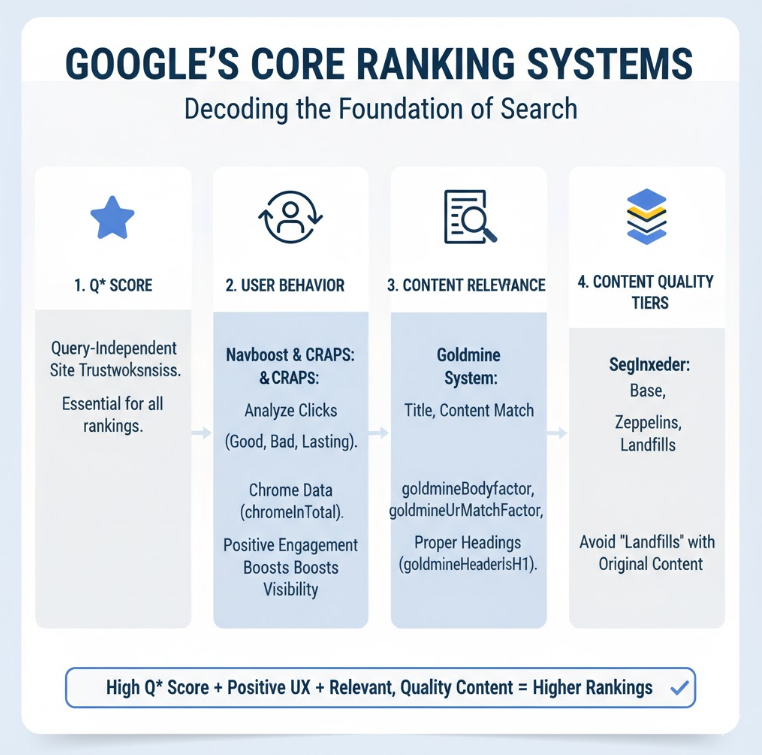
User behavior directly influences rankings through Navboost and CRAPS. These systems analyze click data over thirteen months. They track GoodClicks, BadClicks, and lastLongestClicks. Chrome user data (chromeInTotal) also contributes significantly. Positive user engagement boosts your visibility substantially.
Content relevance is judged by the Goldmine System. It evaluates how well titles match content. Factors like goldmineBodyFactor and goldmineUrlMatchFactor matter. goldmineHeaderIsH1 ensures proper heading structure alignment. Optimizing these elements improves topical authority greatly.
Content quality tiering happens via SegIndexer. It places sites into Base, Zeppelins, or Landfills tiers. The scaledSelectionTierRank determines your placement. Landing in Landfills severely limits ranking potential. High-quality, original content keeps you in the Base tier.
Trust, Safety, and the Technical Reality of EEAT
Mobile experience is more critical than ever. The violatesMobileInterstitialPolicy flag penalizes intrusive pop-ups. adsDensityInterstitialViolationStrength scores ad clutter severity. High clutterScore can smear penalties across your domain. Prioritize clean, mobile-friendly designs always.
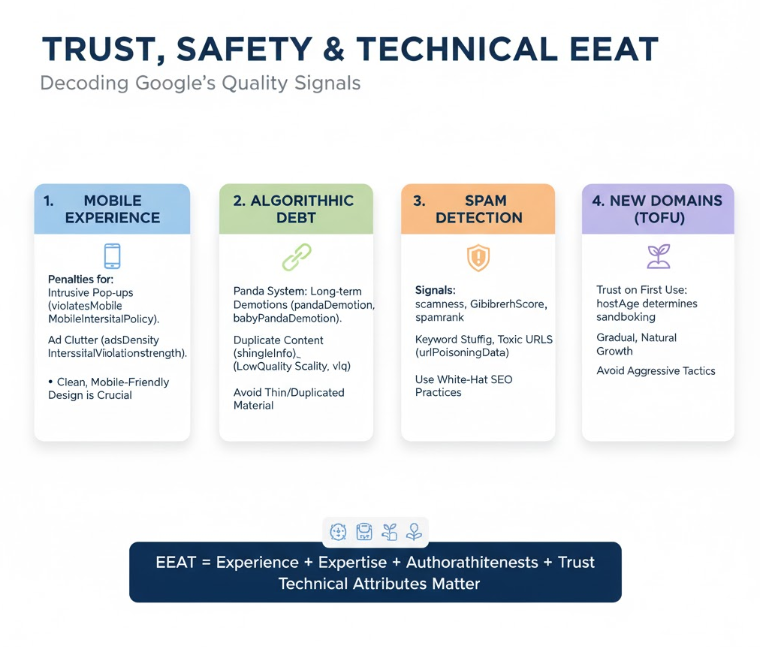
The Panda system creates long-term algorithmic debt. pandaDemotion, babyPandaDemotion signals persist indefinitely. They use shingleInfo for duplicate content detection. lowQuality and vlq scores identify subpar content. Avoid creating thin or duplicated material at all costs.
Spam detection employs multiple sophisticated signals. scamness score, GibberishScore, and spamrank identify low-quality content. KeywordStuffingScore and DocLevelSpamScore penalize manipulation. urlPoisoningData flags toxic or malicious URLs. Maintain white-hat practices consistently.
New domains face tofu (Trust on First Use) evaluation. hostAge determines sandboxing duration for fresh spam. Establish trust through gradual, natural growth patterns. Avoid aggressive tactics that trigger scrutiny.
EEAT now maps to specific technical attributes:
- Experience: contentEffort (LLM-estimated), OriginalContentScore, goldmineBlockbertFactor
- Expertise: site2vecEmbeddingEncoded, siteFocusScore, siteRadius, onsiteProminence
- Authoritativeness: siteAuthority, authorityPromotion, predictedDefaultNsr, homepagePagerankNs
- Trust: Directly impacts Q* score and overall viability
Advanced Image SEO: Beyond Alt Text
Image provenance and originality significantly impact rankings. contentFirstCrawlTime identifies the original image source. rankInNeardupCluster establishes hierarchy among duplicates. isIndexedByImagesearch serves as a quality gate. Always use original, high-quality images when possible.
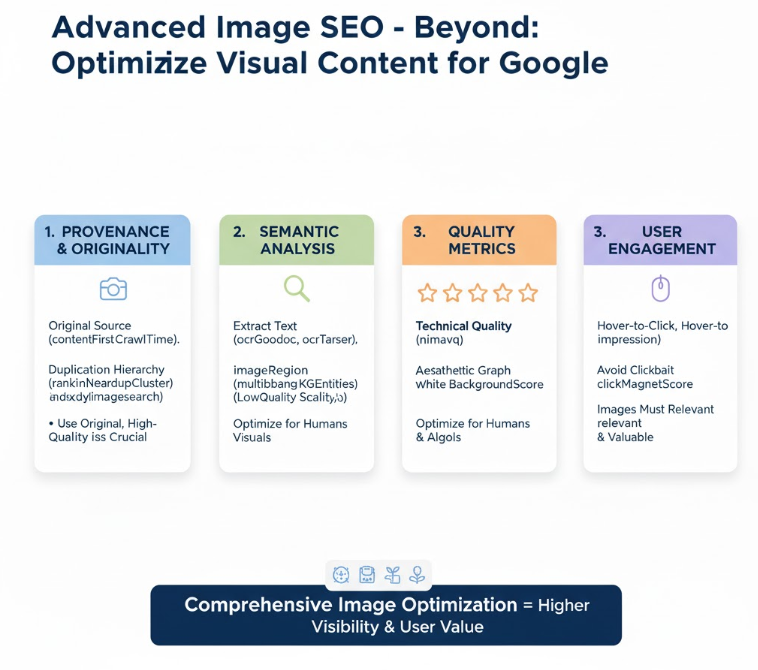
Semantic analysis uses multiple advanced systems. OCR systems (ocrGoodoc, ocrTarser) extract text content. imageRegions enable object recognition capabilities. multibangKgEntities connect images to Knowledge Graph. Optimize images for both humans and algorithms.
Technical and aesthetic quality metrics matter deeply. nimavq scores technical image quality (NIMA). nimaAva measures aesthetic appeal and composition. whiteBackgroundScore indicates professional photography standards. Invest in high-quality visual content consistently.
User engagement with images affects rankings. h2c (hovers-to-clicks) and h2i (hovers-to-impressions) ratios matter. clickMagnetScore penalizes irrelevant clickbait images. Ensure images are relevant and valuable to users.
Comprehensive Actionable Framework
The ABC Signals for Content Relevance
Anchors: sourceOnsiteAnchor (internal) and sourceOffdomainAnchor (external)
Body: goldmineBodyFactor for content-query alignment
Context: Overall page and site relevance signals
Algorithmic Momentum Concept
Google tracks quality trajectory over time. VersionedFloatSignal enables historical quality tracking. Consistent improvement receives algorithmic rewards. Maintain a steady pace of quality improvements.
Local and Commercial Signals
shoppingProductInformation powers rich product results. imageLicenseInfo enables “Licensable” badges. Local signals include brickAndMortarStrengthScore. Implement these for comprehensive optimization.
Strategic Implementation Guide
Content Strategy Optimization
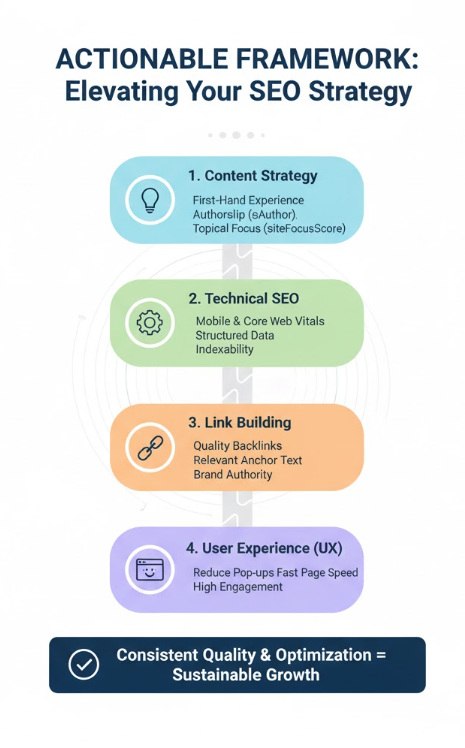
Focus on creating irreplaceable first-hand experience content. Implement clear authorship signals (isAuthor, authorObfuscatedGaiaStr). Maintain consistent topical focus through siteFocusScore. Avoid topic dilution through siteRadius monitoring.
Technical SEO Requirements
Prioritize mobile experience and Core Web Vitals. Ensure clean canonicalization and indexability signals. Implement comprehensive structured data markup. Monitor badSslCertificate to avoid direct demotions.
Link Building Best Practices
Focus on quality of linking pages primarily. Ensure anchor text relevance to avoid anchorMismatchDemotion. Build brand authority for “official source” status. Leverage queriesForWhichOfficial for brand queries.
User Experience Optimization
Reduce intrusive interstitials and pop-ups. Maintain reasonable ad density across pages. Improve page load speed and responsiveness. Enhance overall user engagement metrics.
Quality Control Measures
Implement duplicate content detection systems. Monitor content quality scores regularly. Establish content improvement workflows. Track algorithmic momentum through versioned signals.
Conclusion and Next Steps
The Google leak reveals unprecedented algorithmic complexity. Hundreds of signals work in concert together. Understanding them enables strategic SEO optimization. Begin with comprehensive technical auditing first. Implement mobile experience improvements immediately. Focus on content quality and EEAT signals next. Develop a long-term quality improvement strategy. Remember that sustainable SEO requires patience.
Implementation Timeline:
- Technical audit and mobile optimization (Week 1-2)
- Content quality assessment and planning (Week 3-4)
- EEAT signals implementation (Week 5-6)
- Ongoing monitoring and optimization (Week 7+)
Key Performance Indicators:
- Q* Score improvement
- Mobile experience metrics
- Content quality scores
- User engagement metrics
This comprehensive approach ensures sustainable growth. It aligns with Google’s sophisticated ranking systems. Start your optimization journey today methodically.